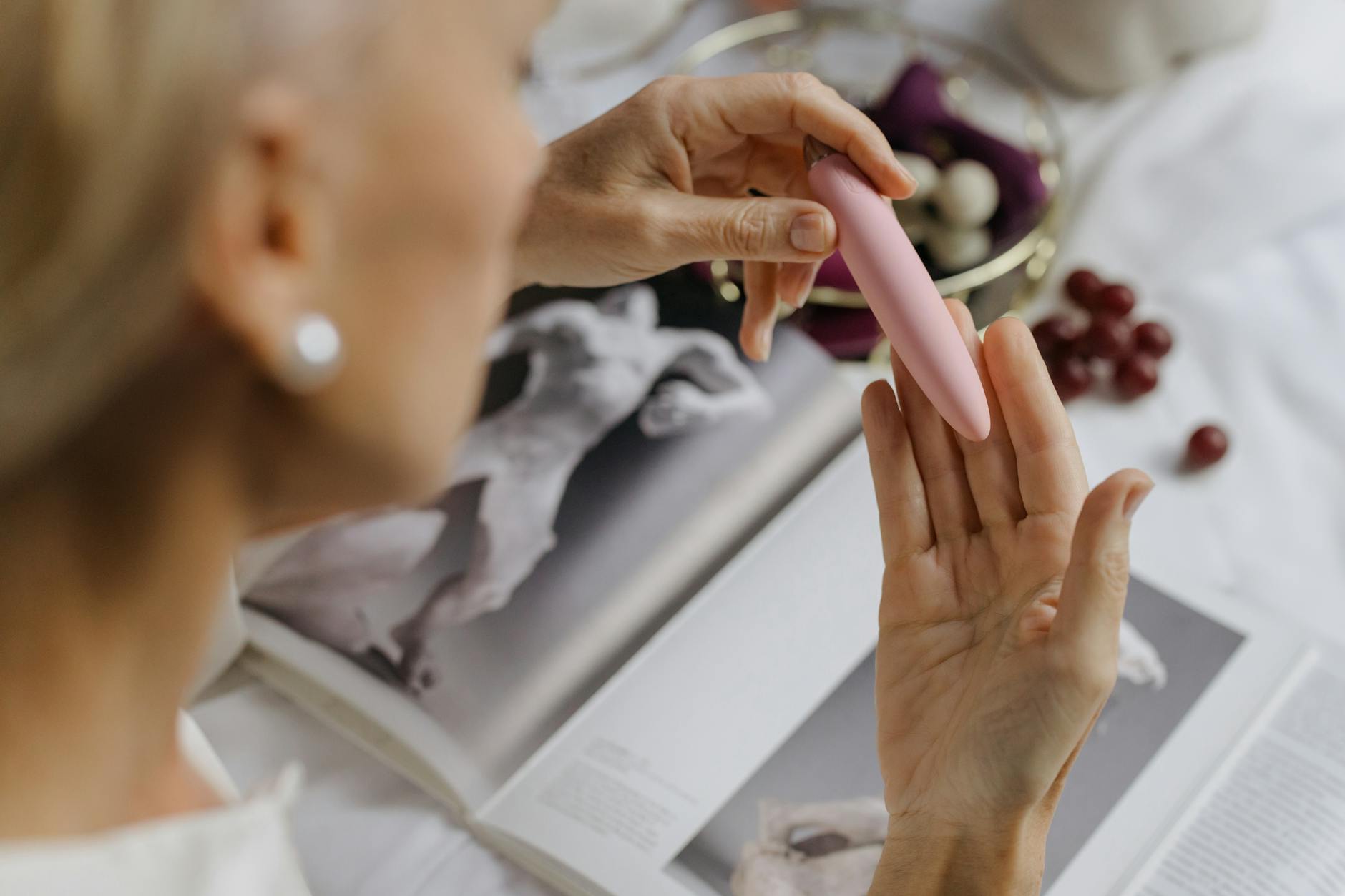
Performance anxiety ruins sex. But it's fixable.
Performance anxiety is the story your brain tells when sex becomes something you're supposed to be good at instead of something you get to enjoy. Your partner's watching, you're worried about how you look, whether you'll orgasm on time, if you're doing it right. Suddenly you're not in your body anymore. You're in the audience watching yourself fail.
Here's the thing: lemon vibrators break that loop. Not by being magic. By being honest.
What performance anxiety actually does to your body
When you're anxious, your nervous system shifts into fight-or-flight. Blood vessels constrict. Your pelvic floor tightens. Arousal doesn't build the way it normally would because your body is literally in survival mode, not pleasure mode. You need longer warm-up time. You need more intense stimulation. Your orgasm might feel distant or impossible.
This isn't a flaw in you. It's neurobiology. Anxiety and arousal can't run at the same volume. One shuts down the other.
Most people respond by trying harder, gritting their teeth, performing even more. That deepens the loop.
A lemon clitoral vibrator does the opposite. It gives your nervous system permission to stop performing and start responding.
Why vibrators actually lower performance anxiety
Three reasons, backed by what I see in my practice:
First, it removes the orgasm deadline. When a partner is inside you, the clock is ticking. You're aware of their pleasure, their timing, the awkwardness of "how long should this take." A vibrator shifts that. Your orgasm becomes the point. Not something happening while you're distracted by someone else's experience.
Second, it reframes the dynamic. You're not failing at sex. You're using a tool that works for your body. Your partner isn't disappointed. They're participating in something that actually gets you there. That's a fundamentally different story your brain tells.
Third, it breaks the cognitive loop. Right now, you're probably watching yourself from outside your body. A vibrator pulls you back in. The sensation is immediate, undeniable, real. You have to pay attention to what's actually happening instead of what you're worried might happen.
How to introduce a lemon vibrator when you have anxiety
Don't surprise your partner. That's not a conversation starter. It's another layer of anxiety.
Instead, name what's happening. "I've noticed that when we're together, my brain goes into a performance mode. I'm not present. I want to try something that helps me get back into my body." That's it. You're not criticizing them. You're naming a real pattern and taking responsibility for fixing it.
Then talk about the practical stuff. Where will the vibrator live. When will you use it. How does your partner feel about being present for it. Do they stay during, or do you want solo time first.
If your partner is a good one, they're not threatened. They're relieved. Most partners in long-term relationships would rather have a partner who's present and uses a vibrator than a partner who's anxious and checked out.
The actual mechanics of using it with a partner present
Start solo first. You need to know how your body responds to the lemon vibrator without the added pressure of someone watching. Spend time exploring what patterns work, what intensity feels right, what gets you there. This is your baseline.
Then, bring your partner in. You can use the vibrator during foreplay. You can use it during penetrative sex. You can use it instead of penetration. The point isn't to follow a script. It's to find what makes you present.
Here's the thing I tell couples: the vibrator is not a toy. It's a translation tool. It's saying "this is what my pleasure looks like." Your partner gets to see it. That's intimate in a way that's actually deeper than the performance version.
Start with dimmed lights, if that helps. Start with your partner using it on you, which removes the awkwardness of you controlling it. Some people find that more intimate than doing it themselves. Others find it adds another layer of self-consciousness. Pay attention to what actually relaxes your nervous system, not what you think should.
Managing the spiral when anxiety creeps back in
It will. Performance anxiety doesn't vanish because you bought a vibrator.
But here's what changes: you now have proof that your body can relax and respond. You've proven it to yourself. When the anxious voice shows up, you have a counter-narrative. "I know this works. My body knows how to do this."
If you notice yourself tightening up, slowing down, or checking out during sex, pause. Tell your partner. Spend a minute with just the vibrator. Get yourself back to baseline. Then decide if you want to continue or if tonight is just a vibrator night.
This isn't quitting. This is staying present instead of pushing through in a dissociated state.
One more thing: talk to your partner after, when you're not in the middle of it. What felt good for them. What was different. What they noticed about you being more present. This feedback loop is what actually rewires the dynamic, not the vibrator itself.
When anxiety is deeper than just performance
If you have a history of sexual trauma, severe anxiety, or a partner dynamic that's consistently made you feel unsafe, a vibrator won't fix that. You need a therapist. A good one. One who specializes in sex and trauma.
But if your anxiety is the garden-variety "I'm in my head during sex" kind, which is honestly most of what I see in my practice, a vibrator combined with honest conversation with your partner is often enough to shift the whole dynamic.
You deserve to enjoy sex. Not endure it. Not perform it. Enjoy it. A lemon clitoral vibrator gives you a tool to get back there.
People also ask
Will using a vibrator make my partner feel insecure or inadequate?
No. That's the anxiety talking. What actually makes partners feel insecure is a partner who's absent, tense, or faking. A partner who brings a vibrator to the bed and says "this helps me be present with you" is offering honesty and engagement. Most partners experience that as relief, not rejection. If your partner does respond with insecurity, that's a separate relationship conversation worth having, ideally with a therapist.
How often should I use a lemon vibrator with my partner before we try without it?
There's no timeline. Some people find that after a few weeks of using a vibrator during partnered sex, they naturally stop needing it because their nervous system has reset. Others use it regularly for years and that's fine. The point is presence, not independence from the tool. Use it as long as it serves you.
Is it normal for the vibrator to feel less intense than I expected?
Yes. Your brain is still in performance mode. You're still partially checked out. That will change as you relax. You might also find that you need less intense stimulation once the anxiety drops because your body isn't fighting you. Give yourself time to adjust before deciding it's not working.
Can I use a lemon vibrator if I'm on antidepressants that affect orgasm?
Absolutely. In fact, you might find that the focused, consistent stimulation from a lemon clitoral vibrator works better than partnered sex alone when you're on SSRIs. This is actually one of the most common situations where people discover vibrators are essential, not optional. Check with your doctor if you have specific concerns, but there's no contraindication.
What if my partner wants to use the vibrator on me but I find that more anxiety-inducing?
Tell them. You can use it on yourself while they're present. You can take turns. You can use it during partnered sex while they focus on something else. The point is what makes your nervous system feel safe, not what you think you should prefer. Preference is allowed.
How do I know if my performance anxiety is bad enough to need therapy separately from using a vibrator?
If you're avoiding sex altogether, if you're experiencing panic during sex, if you're having intrusive thoughts that don't ease with the vibrator, or if your partner has mentioned feeling disconnected or hurt by your anxiety patterns, therapy is worth exploring. A vibrator is a tool. It's not a replacement for professional support when anxiety is significant. Both can be true at the same time.
The real shift
Performance anxiety tells you that your body is the problem. That you're not responsive enough, orgasmic enough, interested enough. The real problem is the story. The pressure. The watching.
A lemon vibrator doesn't fix the story. But it makes the story irrelevant. Because suddenly you're present. You're feeling something real. And your partner gets to be part of that instead of watching you disappear.
That's the shift. Not a tool. A permission slip to be human instead of a performer.