
Let's start with the real part
Honestly, penetration isn't always on the menu. Sometimes it's medical—pelvic floor dysfunction, endometriosis, recovering from childbirth or surgery. Sometimes it's psychological—trauma, anxiety, or just the fact that it doesn't feel good for your body. And sometimes it's neither of those things. Sometimes you just want something different.
What most people don't realize is that you're not actually giving up pleasure when penetration's off the table. You're often just discovering it for the first time.
Why clitoral stimulation is the heavy hitter
The clitoris has 8,000 nerve endings concentrated in a space the size of a pea. Penetration, by contrast, stimulates a much broader but less dense network of nerves. Translation: the clitoris is wired for intensity in a way penetration simply isn't.
This isn't a consolation prize. This is the main event that's been quietly waiting the whole time.
When I work with clients who've moved away from penetrative sex—whether by choice or circumstance—the pattern is almost always the same. Their first thought is "I've lost something." Three months later, they're saying "I think I've actually gained something." The shift happens because lemon clitoral vibrators and similar toys aren't designed to replicate penetration. They're designed to do what penetration can't.
The physical setup that changes everything
If penetration's off limits, you get to design your pleasure architecture from scratch. This is actually freedom, even though it doesn't feel like it at first.
Here's what I suggest:
Start with positioning comfort. You don't need to be in any particular position. Lie on your back, sit against a pillow, stand in the shower, lie on your side. If your body has pain or restrictions, your position gets to honor that. This alone is different from penetrative sex, which often requires a few "standard" positions.
Build in warmup time. Clitoral stimulation works best when you're already aroused. Spend 10-15 minutes on whatever gets you there—reading, thinking, watching, being touched by a partner, or just breathing and checking in with your body. Then introduce the lemon vibrator. This isn't extra time. It's essential time.
Learn your contact preference. Some people love direct clitoral contact. Others need the vibrator against the hood or the surrounding tissue. A lemon clitoral vibrator's design lets you control exactly where the suction and stimulation land. There's no guessing.
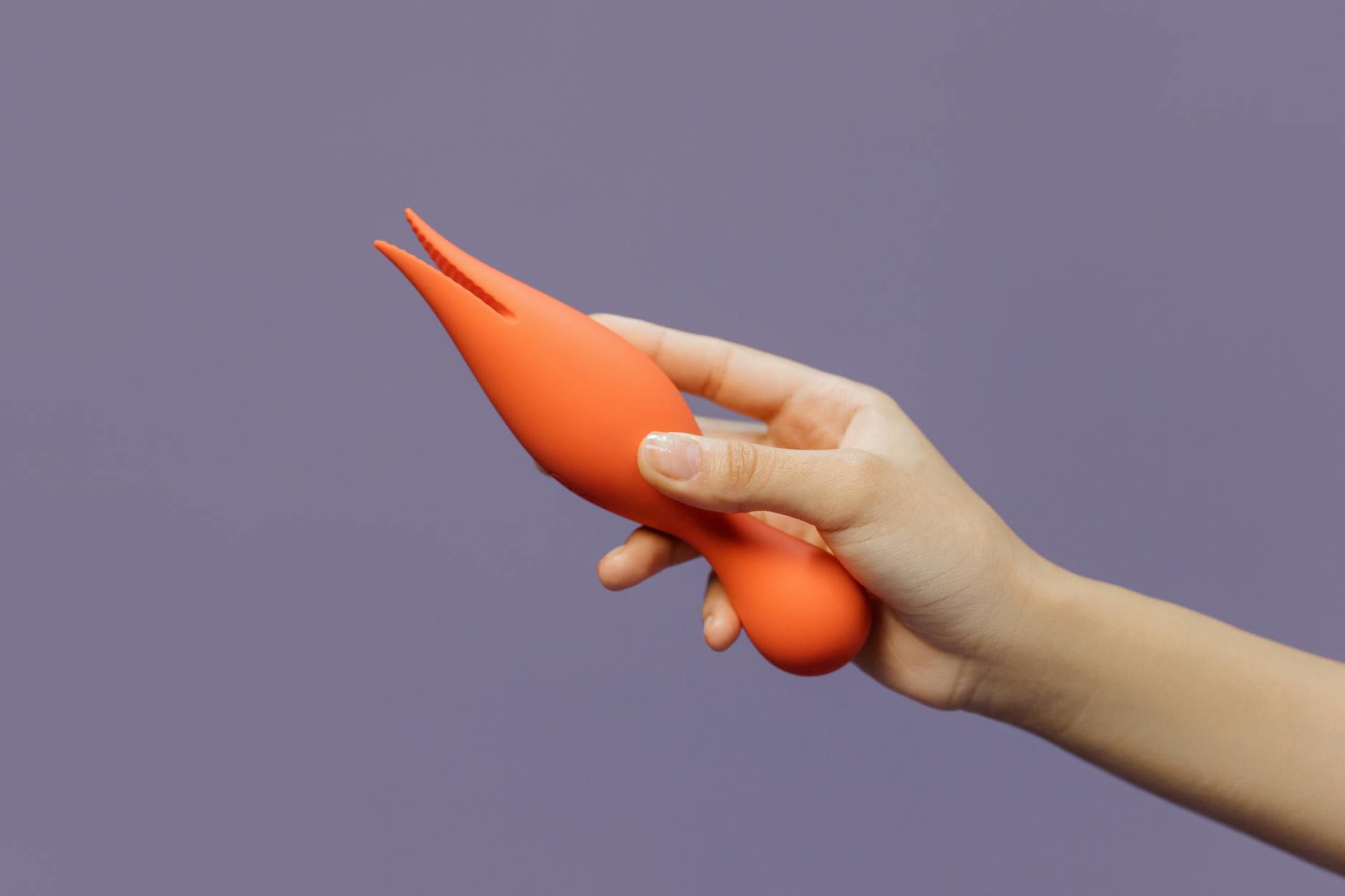
Photo by cottonbro studio on Pexels
What intensity settings actually do (and why they matter more now)
Lemon vibrators typically offer 5-7 intensity levels. When penetration isn't an option, those levels become your entire pleasure vocabulary.
Start at level 1 or 2. I know this feels slow. Your brain might be saying "I'm ready for more." But low intensities let your nervous system acclimate and your clitoris wake up without overwhelming it. This is especially true if you've been avoiding pleasure because of pain or discomfort. Your body needs to rebuild trust.
As you move through sessions over days or weeks, you'll discover which intensity gets you closest to orgasm and which one carries you over the edge. Some people find that level 3 is the sweet spot. Others need level 5 or 6. There's no "right" answer. Your body is the only expert that matters.
What actually happens: clitoral sensitivity often increases with regular, lower-intensity stimulation. This means you might start at level 2 and eventually find that level 3 or 4 becomes more pleasurable—not because the vibrator changed, but because your tissue is more responsive.
When your partner wants to participate
One of the gifts of non-penetrative sex is that it's wildly partner-friendly. A partner can hold a lemon vibrator for you. They can kiss you while you use it. They can be inside the moment in ways penetration sometimes doesn't allow—because there's no performance pressure, no choreography to nail.
If you have a partner, the conversation goes like this: "Penetration's off the table right now. But I want us to explore pleasure together. Want to try this?"
That's it. No shame. No apology. Just clarity.
Some partners feel relieved. Some feel initially uncertain. That uncertainty usually dissolves the second they see how much sensation and satisfaction a lemon clitoral vibrator creates. It reframes the whole evening from "we can't do X" to "we get to discover Y."
Solo play redesigned
Without penetration, solo sessions become entirely about you. Not about warming up for something else. Not about doing it "right." Just about pleasure.
I encourage people to try this: set aside 30 minutes with zero agenda. You're not trying to orgasm. You're exploring. Start with the vibrator on low, move it around, notice where sensation clusters. Some spots feel incredible. Some feel nothing. That's data, not failure.
Most people find that after 2-3 sessions of pure exploration, orgasms start happening. They're often different from what you're used to—sometimes more intense, sometimes longer, sometimes in waves instead of peaks. All of that is normal and worth investigating rather than trying to fix.
Pain, numbness, and when sensation changes
Sometimes penetration feels uncomfortable because there's actual pain. Sometimes it's numbness or disconnection. These need different responses.
If pain is present, see a pelvic floor physical therapist before going all-in on clitoral play. Pain is information. It's not something you overcome with the right toy.
If it's numbness or deadness in the clitoris or surrounding tissue, consistent low-intensity stimulation often wakes things back up. A lemon clitoral vibrator's design is particularly good for this because the suction sensation is different from vibration alone. You're not creating fatigue through repetition. You're introducing a new type of stimulation that reconnects tissue and nerve.
The mental shift that makes it work
Here's the part no one talks about: the biggest barrier to pleasure without penetration isn't physical. It's mental.
Your brain probably has a whole architecture built around what sex "should" look like. Penetration is usually in that architecture somewhere. When it's off the table, grief shows up. That's real. Let it.
But then notice this: every single orgasm you've ever had came from clitoral stimulation or the build-up to it. Penetration was never actually the main event. It was the opening act. Now you're skipping straight to the headliner.
This reframing—from loss to reorientation—is what changes everything. You're not giving up pleasure. You're finally putting the pleasure-center of your body in the center of your attention.
FAQ
Can lemon clitoral vibrators replace penetrative sex entirely?
Yes. Orgasms from clitoral stimulation are often more intense than those from penetration alone. Some people incorporate both. Some people find that once they've experienced the focused pleasure of a lemon clitoral vibrator, they never want to go back. Your body gets to decide.
What if my clitoris is too sensitive to use a vibrator directly?
Start with the vibrator over the hood rather than directly on the glans. You can also hold it slightly above the skin and let the sensation reach you indirectly. And use the lowest intensity setting. Many people find that sensitivity decreases after a few sessions as the tissue becomes more familiar with the stimulation.
How do I tell a partner that penetration's off the table without it feeling like rejection?
Frame it as a positive direction, not a limitation. "I want to explore something different that feels better for my body" is radically different from "we can't do this anymore." The first one opens a conversation. The second one closes it.
Does using a lemon clitoral vibrator alone mean I'll stop wanting partnered sex?
No. Most people find that clitoral pleasure actually increases interest in partnered intimacy because pleasure itself becomes less fraught. You're not seeking validation or performance-based success. You're seeking connection from a place of already knowing your body works.
What if I can't orgasm even with a vibrator?
Orgasm isn't the goal. Pleasure is. Some people find that when they stop chasing the orgasm and just stay present with sensation, orgasms happen naturally. Others find deep satisfaction without them. Both are completely valid.
How often should I be using a lemon clitoral vibrator for the best results?
There's no magic frequency. Some people use them daily. Some use them once a week. The only rule is consistency. Your nervous system and tissue respond better to regular, predictable input than sporadic sessions. Find what works for your life and body, then stick with it.
What actually changes
When penetration's off the table, the real shift is permission. Permission to focus on what actually feels good. Permission to spend time on pleasure that isn't about performance or penetration or anything except sensation. Permission to build your sexual life around your clitoris instead of designing it around something else.
A lemon clitoral vibrator is just the tool. The actual magic is realizing that you never needed penetration to have incredible sex. You just needed to stop waiting for someone else's pleasure architecture and build your own. That architecture is already inside you. You're just finally paying attention to it.