Let's start here: you're not broken
You've just left a long relationship. Maybe it ended well, maybe it didn't, but here you are now with a body that hasn't had solo time in years. That's disorienting. Your nervous system has been calibrated to another person's rhythm, another person's timing, another person's hands. Now there's just you, and it feels weirdly unfamiliar.
The first thing I hear from people in this position is some version of: "I don't even know what turns me on anymore." That's not a deficiency. That's just what happens when you've been outside your own head for a decade.
Why solo exploration matters after a long relationship
Here's what most people don't talk about: partnered sex, even good partnered sex, teaches your body to respond to external stimulation. You learn to pleasure yourself through someone else's effort. Your nervous system becomes trained to wait for cues, to sync with another person's arousal curve, to calibrate pleasure around their satisfaction.
When you're suddenly alone, that training works against you. Your body expects the call-and-response that never comes. Many people report feeling numb or disconnected at first, not because anything is wrong with them, but because their pleasure circuitry has been dormant.
Rediscovering solo play after a long relationship is essentially rewiring that circuitry. It's not frivolous. It's foundational work. The research on solo pleasure is clear: people who maintain an active solo practice report higher satisfaction in partnered sex, better orgasm consistency, and more emotional resilience. It's not separate from relational health. It's part of it.
The specific challenge of starting again
Three things make solo play harder after years in a relationship.
First: mental noise. Your brain is still oriented toward another person. Thoughts about them, conversations you wish had gone differently, or anxieties about being alone keep intruding. You're trying to focus on sensation while your monkey brain is narrating a breakup in the background. That's exhausting.
Second: touch expectation. Your body learned a specific sequence. A touch on your arm meant sex was coming. A particular kiss meant foreplay was about to accelerate. When you're alone, there's no progression. You have to create the whole arc yourself, and that requires intention in a way that feels awkward at first.
Third: performance residue. In long relationships, even healthy ones, there's often a small thread of performance. You learned what your partner responded to. You optimized for their pleasure alongside your own. That optimization becomes a habit. Alone, you might find yourself still performing, still waiting for the reward that comes from someone else's satisfaction instead of your own.
Lemon clitoral vibrators help with all three.
How lemon vibrators create the right starting point
When I recommend lemon sexual toys to someone rediscovering solo pleasure, I'm not suggesting a shortcut around these challenges. I'm suggesting a tool that makes the work easier.
The specific design of lemon clitoral vibrators like the Lem matters here. Air-suction stimulation feels entirely different from partner touch. It's not mimicking anything you learned in a long relationship. There's no performance track to slip into because suction creates a sensation your partnered sex never trained you for. That unfamiliarity is actually the point. It helps you step outside the old pattern.
The rhythm control is also crucial. With a lemon vibrator, you're choosing the intensity and pattern from the first touch. You're not waiting for permission or syncing to someone else's pace. The control is immediately yours. That sounds simple, but for people relearning autonomy, it's profound.
Many clients tell me that the sensation of suction feels less like "sex" and more like "exploration." That reframe is helpful. You're not trying to recreate partnered pleasure. You're discovering what solo pleasure actually feels like after a decade of someone else's hands.
Building your solo practice: the real work
Here's the practical part. Starting a solo practice after a long relationship takes intention.
Create a physical environment. This isn't about candles and Barry White. It's about basic privacy and comfort. Close the door. Put your phone in another room. Tell yourself you have thirty minutes that belong only to you. That boundary is harder than it sounds when you're used to living inside someone else's schedule.
Start without the vibrator. Honestly. Spend at least a few solo sessions just touching yourself with your hands. No device. No performance. Just noticing what feels good, what doesn't, what your body wants when there's zero external pressure. This usually feels awkward for about four minutes, then something shifts. You start remembering that pleasure is a conversation between you and your own nervous system.
Then add the lemon vibrator slowly. Start at the lowest setting. Notice what sensation you feel. This is not about reaching an orgasm fast. It's about rewaking the nerve endings. Many people report that the first few sessions feel less intense than they expected. That's normal. Your body is literally learning a new stimulus. Let it.
Expect inconsistency. Sometimes you'll be wildly aroused. Sometimes you'll feel nothing. Sometimes your brain will wander. This is not failure. It's exactly what relearning feels like. Each session is useful data, even the ones that feel flat.
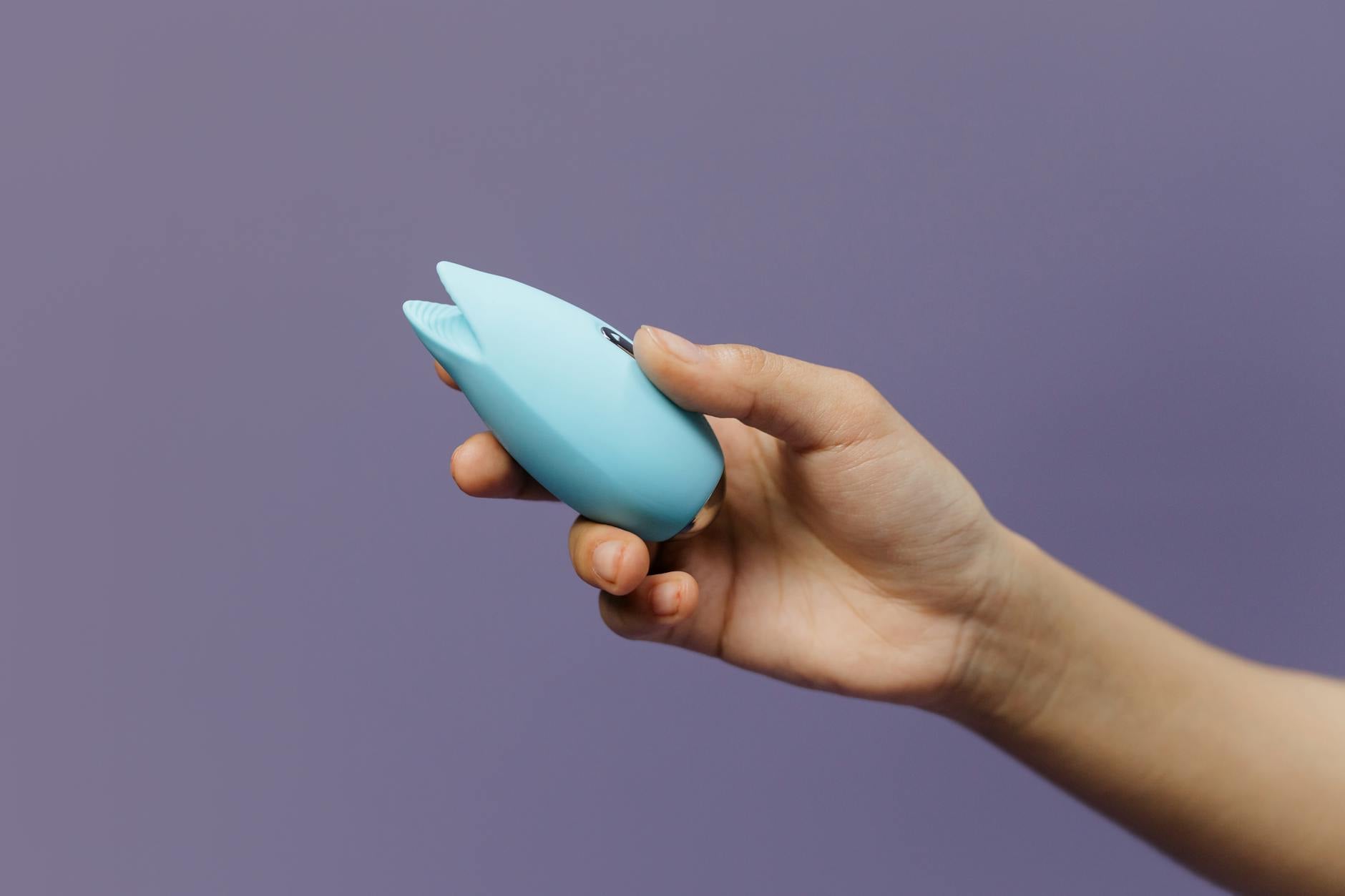
Photo by cottonbro studio on Pexels
The confidence piece: why this actually matters
After a long relationship ends, confidence takes a hit. You might wonder if you were ever actually desirable, or if your partner's attraction was obligation. You might feel rusty or unsure of your body. That's grief, and it's normal.
Solo pleasure practice, especially with a tool like a lemon clitoral vibrator, rebuilds that confidence from the ground up. Each time you have an orgasm alone, your brain registers: "My body knows how to do this. My nervous system can create pleasure without anyone else." That's not narcissism. That's the foundation of healthy relational sexuality.
When you eventually move into new partnerships, this solo confidence translates. You know what turns you on. You know the difference between "partner-pleasing" and actual desire. You can ask for what you want because you've already practiced wanting something. Your partners benefit. You benefit.
The relationship to self-pleasure: separating myth from reality
Let's talk about the thing nobody says out loud: guilt. Many people, especially if they were raised in religious or conservative contexts, carry some residual shame about solo pleasure. Adding a vibrator to that history can feel like compounding the transgression.
Here's what I tell clients: masturbation is not a rebellion against partnered sex. It's not a sign you're unsatisfied or unfaithful or broken. It's a biological capacity for pleasure that belongs to you and only you. A lemon vibrator is not cheating on a future partner. It's not a replacement for intimacy. It's a tool for knowing your own body.
If you're carrying guilt, name it. Feel it. Then remind yourself: you deserve to know what pleasure feels like in your own hands. That's not negotiable.
When to check in with yourself
Solo exploration should feel neutral to positive. If after a few weeks you're feeling more disconnected, more sad, or using the lemon vibrator to numb rather than to feel, that's useful information. Sometimes what looks like pleasure exploration is actually self-soothing around unprocessed grief. Both can be true at once, but it's worth noticing.
If you find that you only feel pleasure with a vibrator and never feel any baseline arousal otherwise, that can also be a signal. Not necessarily a problem, but worth exploring. Sometimes the nervous system needs gradual recalibration before adding stimulation tools.
Most people find that after four to eight weeks of consistent solo practice with a lemon clitoral vibrator, something shifts. The pleasure feels more natural. Your body starts initiating arousal on its own. You stop performing and start actually feeling. That's when you know the rewiring is working.
Bringing this forward
One last thing: this solo work doesn't disappear once you're partnered again. In fact, it becomes more valuable. The couples I work with who maintain individual solo practices tend to have better sex lives, less pressure, and more genuine desire. Your lemon vibrator doesn't become obsolete. It becomes part of your intimate life, solo or partnered.
The goal here isn't to become addicted to vibration or to replace human connection. It's to reclaim your own pleasure as something that belongs to you first. After a long relationship, that reclamation is healing work. Your body, your nervous system, and any future partners will thank you for it.
Frequently Asked Questions
How long does it usually take to feel comfortable with solo play again after a long relationship?
Most people report feeling less awkward within three to four weeks of consistent practice. That said, "comfortable" develops in layers. Physical comfort can arrive pretty fast. Emotional comfort, freedom from guilt or performance residue, that sometimes takes two to three months. There's no deadline. If it's been six months and you still feel disconnected, that might be worth exploring with a therapist, especially if the relationship ending was particularly painful.
Is it normal to not feel anything the first time using a lemon vibrator?
Completely normal. Your nervous system has been trained to expect partner touch, or specific touch patterns, or emotional arousal cues alongside physical stimulation. A new sensation takes a few sessions to register as pleasurable. Your brain also might be skeptical. "Is this actually supposed to feel good?" that internal monologue can block sensation. Give it at least three solo sessions before deciding if it works for you.
Should I tell future partners about my solo pleasure practice?
That depends on your values and the relationship. There's no obligation to disclose your solo practice to anyone. At the same time, many couples find that honesty about solo pleasure actually strengthens partnered sex. You might say something like: "I've been exploring solo pleasure and learning what I actually like. That's made me more confident about what I want with you." That frames it as an asset, not a secret.
Can using a lemon vibrator make partnered sex feel less satisfying?
No. The research on this is pretty clear. Solo pleasure practice doesn't diminish partnered satisfaction. If anything, it increases it because you know what you're looking for. The only scenario where solo play might feel more satisfying than partnered sex is if the partnership itself isn't working. That's useful information, but it's about the relationship, not the vibrator.
What if I feel guilty or ashamed using a lemon vibrator?
Guilt usually comes from a few sources. Old religious or family messaging about sex. Feeling like you should want partner sex and be satisfied by it. Fear that vibrators are "cheating" or unfeminine or weird. All of these are worth questioning. Ask yourself: "Where did I learn that about myself?" Sometimes naming the source helps you release it. If shame persists, talking with a sex-positive therapist can be really helpful.
How do I know if solo pleasure practice is helping or if I'm just using it to avoid processing the breakup?
Good question. There's actually no either/or. You can be processing grief AND exploring pleasure. The difference is the direction of energy. If you're using solo play as a way to feel alive, to reclaim your body, to rebuild confidence, that's healing. If you're using it to numb out, to avoid feeling lonely, to fill time obsessively, that's avoidance. You'll feel the difference in your body. Healing feels like expansion. Avoidance feels like contraction, even if it's temporarily pleasant. Trust that intuition.
Moving forward
Rediscovering solo pleasure after a long relationship is one of the most underrated forms of self-care. It's not self-indulgent. It's foundational. Your nervous system needs to remember that pleasure is something you can create, that your body has agency, that you know what you want.
Tools like lemon clitoral vibrators help make that relearning easier. They give you a sensation that's entirely yours, a rhythm you control, and permission to explore without performance. That's the work. Start there, and let your body guide you forward. You already know more than you think you do.